
Cambodia is a fascinating destination in Southeast Asia, renowned for its ancient temples, magnificent architecture, and distinctive Khmer culture. Home to the legendary Angkor complex, the country offers visitors an extraordinary journey through centuries of history, spiritual traditions, and peaceful rural landscapes.
From the monumental temples of Siem Reap to the royal landmarks of Phnom Penh and the tranquil countryside, Cambodia reveals a remarkable blend of ancient heritage and contemporary life.
Angkor Wat – A Timeless Architectural Masterpiece
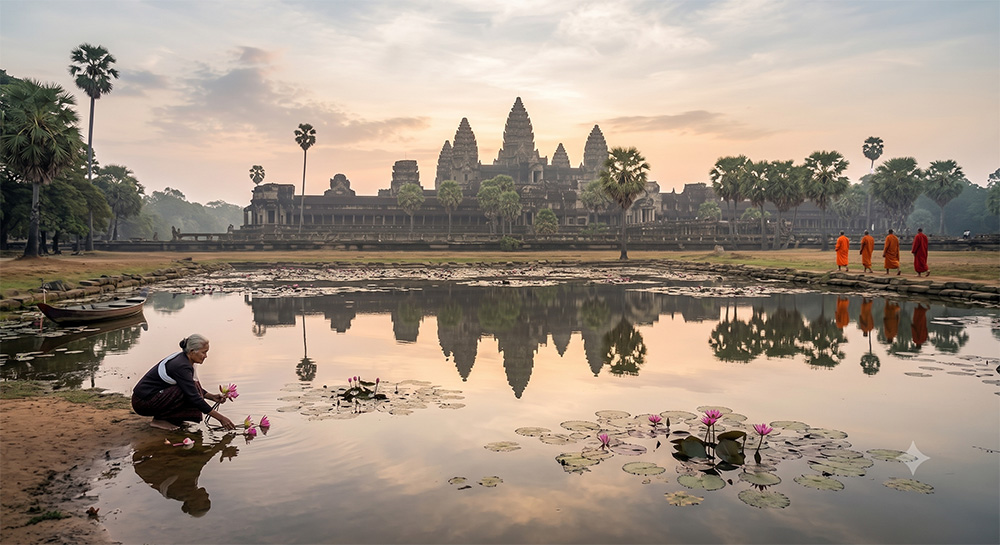
Angkor Wat is undoubtedly Cambodia’s most iconic landmark and one of the largest religious monuments in the world. Built in the 12th century during the Khmer Empire, this magnificent temple complex demonstrates the extraordinary architectural skills and artistic achievements of ancient Khmer civilization.
Its towering stone structures, intricate carvings, expansive galleries, and detailed bas-reliefs depicting Hindu epics create an atmosphere of grandeur and mystery. Angkor Wat is also a UNESCO World Heritage Site and remains a powerful symbol of Cambodia’s national identity.
Watching the sunrise over Angkor Wat is an unforgettable experience. As the first rays of sunlight illuminate the temple’s distinctive towers, their reflections appear on the surrounding ponds, creating a breathtaking scene that attracts visitors from across the globe.
Beyond Angkor Wat, the ancient city of Angkor Thom and the Bayon Temple are equally remarkable. The Bayon is famous for its enormous carved stone faces, which gaze serenely in different directions, reflecting the artistic sophistication and spiritual significance of the Khmer Empire.
Siem Reap – The Gateway to Khmer Heritage
Siem Reap is one of Cambodia’s most popular tourist destinations and the ideal starting point for exploring the Angkor archaeological complex. The city combines traditional Cambodian charm with modern hospitality, offering a wide range of accommodations, restaurants, cafes, and cultural attractions.
Visitors can explore vibrant local markets, browse traditional handicrafts, enjoy Khmer cuisine, or experience traditional dance performances. The city’s night markets and lively streets provide opportunities to discover local products and interact with the community.
Siem Reap also serves as a gateway to nearby rural villages, where visitors can experience traditional lifestyles and gain a deeper understanding of Cambodia’s cultural heritage.
Phnom Penh – Royal Grandeur and Historical Legacy
Cambodia’s capital, Phnom Penh, is a city where royal traditions, historical landmarks, and modern development coexist. The Royal Palace is one of its most impressive attractions, featuring golden roofs, elegant architecture, and beautifully maintained gardens.
Within the palace grounds, the Silver Pagoda stands out for its religious significance and valuable Buddhist treasures. These royal landmarks offer visitors an insight into Cambodia’s monarchy, cultural identity, and spiritual traditions.
Phnom Penh is also home to important historical museums and memorial sites that tell the story of the country’s difficult past. These places provide opportunities to reflect on Cambodia’s history, resilience, and journey toward recovery.
Natural Beauty and Traditional Life
Beyond its historical monuments, Cambodia is blessed with diverse natural landscapes. Tonlé Sap Lake, one of Southeast Asia’s largest freshwater lakes, is renowned for its rich biodiversity, floating villages, and unique seasonal water system.
Visitors can take boat excursions to explore communities living along the lake, observe traditional fishing practices, and discover the close relationship between local people and their natural environment.
Cambodia’s countryside is equally captivating, with vast rice fields, traditional wooden houses, sugar palm trees, and peaceful rural villages. These landscapes provide a relaxing escape from urban life and an opportunity to experience the country’s authentic charm.
Khmer Cuisine and Unforgettable Experiences
Cambodian cuisine reflects the country’s agricultural traditions and the influence of the Mekong River. Freshwater fish, rice, tropical vegetables, herbs, and aromatic spices form the foundation of many traditional dishes.
One of the most famous specialties is fish amok, a fragrant dish made with fish, coconut milk, and traditional Khmer spices, gently steamed to create a rich and delicate flavor.
Visitors can also enjoy traditional soups, grilled fish, fresh tropical fruits, and local street food while exploring markets and restaurants throughout the country.
Cambodia is an ideal destination for travelers interested in history, architecture, spirituality, and authentic cultural experiences. From magnificent ancient temples to peaceful countryside villages, every journey reveals another layer of the country’s remarkable heritage and leaves visitors with lasting memories.